Celtic
Celtic
Mythology
Mythology
Celtic Mythology
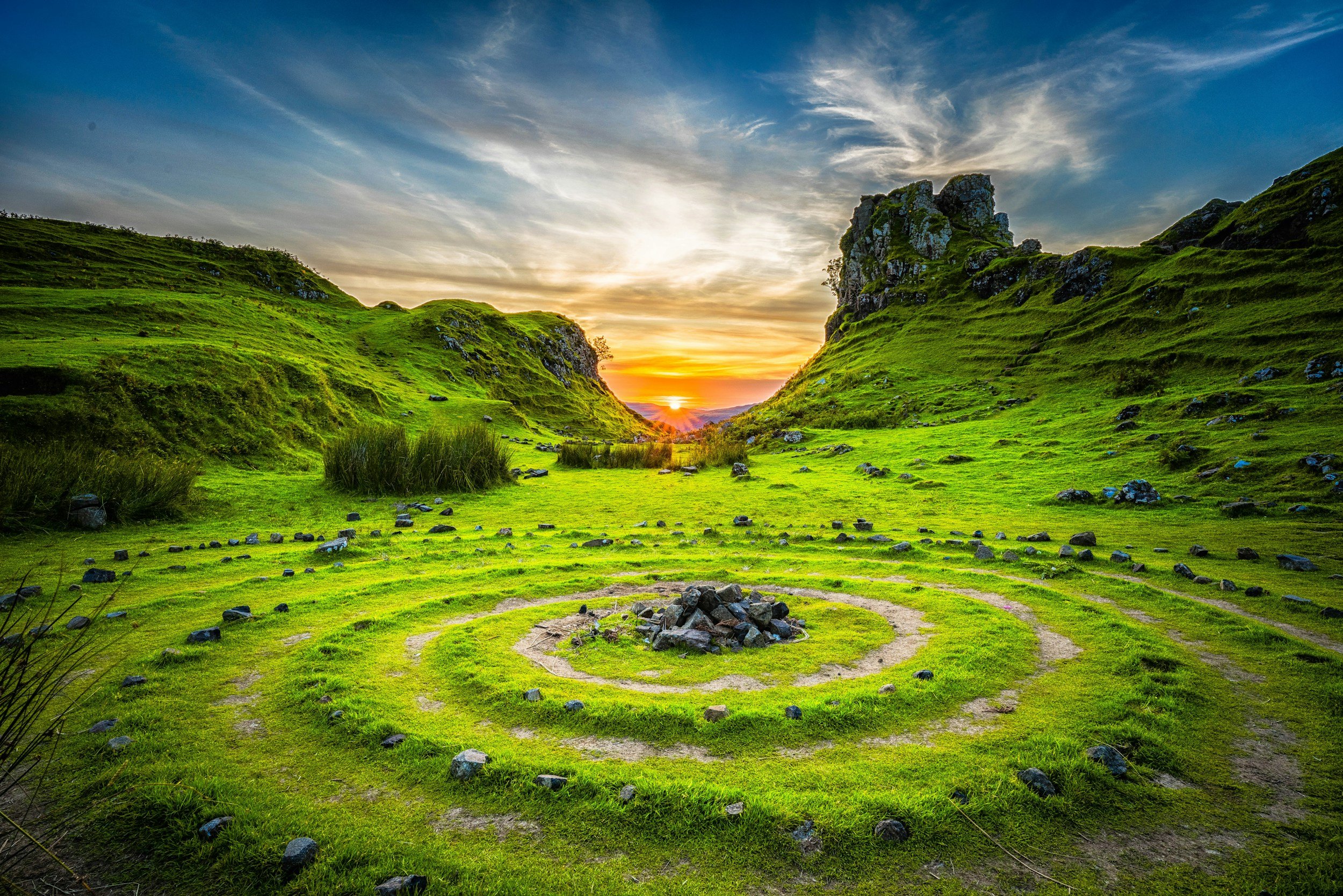
The Celts were a pre-Christian people who practiced a Polytheistic style of religion, often referred to as Celtic Paganism. The Celtic gods were the guardians of the natural world and played a part in the fates of human lives, by being less standoffish than the later Christian god.
People are often more familiar with the Irish Celts but there were in fact six Celtic nations, spreading out across Ireland, Britain, and into Europe.
The Celts worshiped a large number of gods, and it is believed that there were likely over 300. However, as the Celts followed a tradition of oral storytelling and history, many accounts were lost over time. The knowledge of the gods and the Celtic way of life was kept by the druids, and they did not leave behind any written records. All we have to look at our second-hand accounts from the early Christian monks and archaeological finds. Due to the lack of original written records many tales of the gods have been lost to history.
We can, however, put together ideas of how the Celts lived and worshipped their gods from the sources available to us.
At the heart of Celtic worship were the druids who acted as the link between the people and the gods. They would lead the religious services and acted as a voice for the natural world.
For the Celts, sacred places were found in nature, and it was common for areas such as groves and caves to be consecrated in a similar manner to how the Christians have their churches. It was in nature that a person was able to find the entrances to the Otherworld, or the Tír na nÓg.
Over time, as with the oral traditions, many sacred places have been lost as society has destroyed and built over them.
Celtic Gods
-
![]()
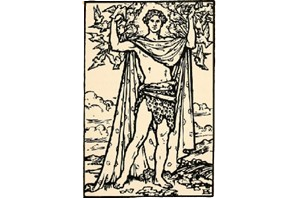
Aengus
Angus hath come, the young and the fair, The blue-eyes god with golden hair, The god who to the world doth bring, this morn the promise of the spring.
-
![]()
Arawn
‘Hir yw’r dydd a hir yw’r nos, a hir yw aros Arawn’ – ‘Long is the day and long is the night, and long is the waiting of Arawn’
-
![]()
Babd
Coming soon!!!
-
![]()
Brigid
Blessing in Brigid’s Name:
May her fire spark your inspiration,
Her waters cleanse your soul,renn
And her forge shape your destiny. -
![]()
Cailleach
I am Ireland:
I am older than the Hag of BearaI am Ireland:
I am lonelier than the hag of Beara
(Patrick Henry Pearse 1879-1916) -
![]()
Ceridwen
Coming soon!!!
-
![]()
Cernunnos
Horned Stag, Run Though the Wood,
The Wood of Gold and Green
Lead Us Down the Ancient Path
To Mysteries Unseen. -
![]()
Dagda
A god of many titles, but above all a powerful warrior of the Tuatha dé Danann.
-
![]()
Danu
Peace mounts to the heavens
The divine waters descend to earth
And fructifies our lives
Earth lies under the heavens
We are of the Earth now
And everyone is strong …(Mórrígán’s song to Danu)
-
![]()
Herne The Hunter
Coming soon!!!
-
![]()
Lugh
Coming soon!!!
-
![]()
Morigan
Coming soon!!!
-
![]()
Neit
Son of Indui, Surly of Temper, The Stranger, Dangerous, He of the Long Weapon, King of the North Country, Lord of Horse-Breeding People.
-
![]()
Nuada
Coming soon!!!
-
![]()
Taranis
Transferral of the war pleased you too, Treviri
and you, Ligures, now shorn of hair but once in all of Long-Haired
Gaul unrivalled for your tresses flowing gracefully over your necks;
and the people who with grim blood-offering placate
Teutates the merciless and Esus dread with savage altars
and the slab of Taranis, no kinder than Diana of the Scythians.
Folklore
-
![]()
Irish Celts - The Mythology Cycle
-
![]()
Irish Celts - The Fenian Cycle
-
![]()
Irish Celts - The Ulster Cycle
-
![]()
Irish Celts - The King (Historial) Cycle
-
![]()
Coming soon
